
Ten Books That Took Me to Advaita Vedanta
Two of which I never saw coming

I grew up Catholic in a small, convent-schooled corner of Kerala, never religious, but always on shameless terms with a few of my favourite intermediaries to God (candles, rosaries, novenas, currency, the usual). Indian philosophy (or any philosophical intellectualisation) did not touch me until I left India as an adult.
I was not even a full-time reader. Yes! 😃 I did not read books as often as I do now (yikes). My dog, whom I loved a lot, was the reason I turned to books in the first place (that story is for later). I started with self-help books (think atomic habits, working backwards, hit refresh etc), like any other tech “sis”.
That tech-sis-self-help phase, as embarrassing as it sounds now to me, was the first crack in the door. One book led to another and before I fully realised, I somehow landed on Indian Philosophy and never quite left.
So here are the ten books that took me to Advaita Vedanta, a Hindu tradition of non-dualistic philosophy which changed how I live, how I breathe, and how I think and, in general, helped me make sense of my life along the way.
1. The Holy Geeta
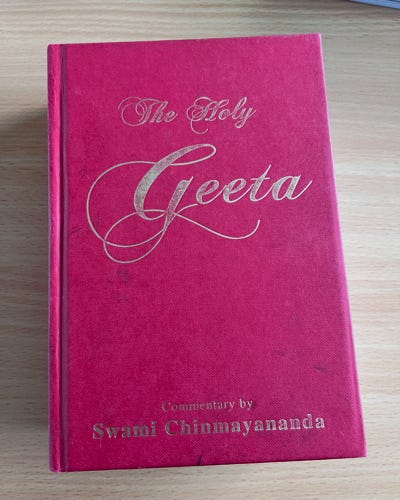
What can I - a mere mortal say, with my limited understanding about the Bhagavad Geeta? If there is one book any human should read at least once in their lifetime, I would point to this one. It took me three different commentaries of the Bhagavad Geeta before I found the one that suited my temperament and eventually became my life’s manual.
Swami Chinmayananda’s commentary takes you through each verse of this sacred teaching and turns it into a working instruction for practising non-duality in your daily-wordly life.
2. Be As You Are
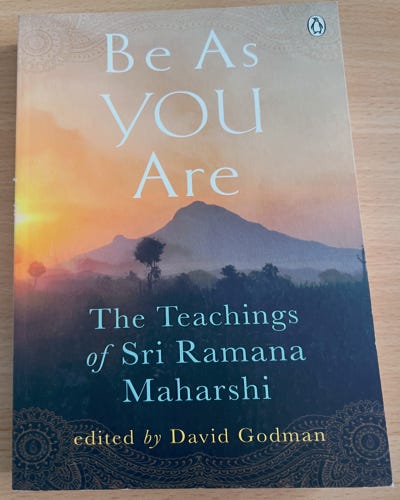
I have to thank Instagram and its algorithm for this one. That’s how Ramana Maharshi first showed up on my feed. They probably do some good in the world too, pushing content like this out occasionally, even when my search history was mostly about beauty, food, and celebrities.
Something about Bhagawan Ramana struck a strange, immediate connection, enough that I went looking for videos about him. The video series by David Godman was exceptional. The natural next step for me was stalking other content by him, and that’s how I bought this book, edited by the same David Godman, a Q& A style book that clears, question by question, the fog the ego sets in your mind about the “Self”.
3. The Teachings of Ramana Maharshi
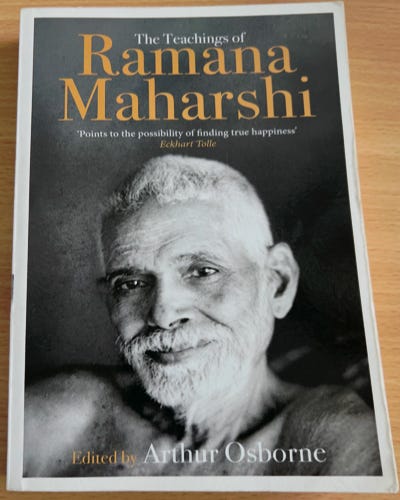
Naturally, from the previous book, my Amazon cart welcomed a new guest with this one too. Edited by Arthur Osborne, very similar in theme to the previous book. At first, I wasn’t sure what these repetitions of the same questions meant. I thought - What was “new” here? It was only once I dived deep into scriptures that I understood the value of repeating something.
Repetition reinforces the practice.
I am currently reading books like Vivekachudamani, and I see this type of repetition is a constant theme, necessary for serious learners. Although the question remains the same, each day you as a person are also evolving, and the way you read/understand the answers also change.
4. Kaivalya Navaneeta
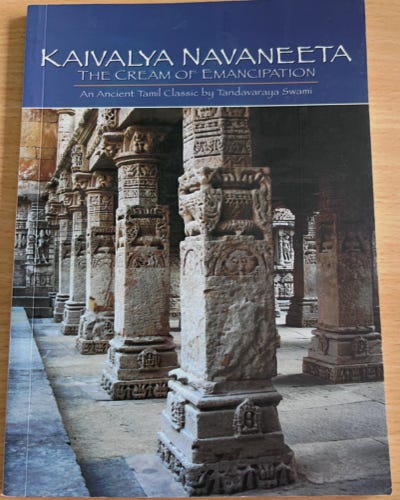
This book was referenced by Bhagawan Ramana himself. The author, Tandavaraya Swami, says this book is “the cream of milk from the ocean of Upanishads” and that too, condensed into a 68-page read. I simply had to get it. This book is in the style of a conversation between a master and his disciple.
5. Yoga Vasistha
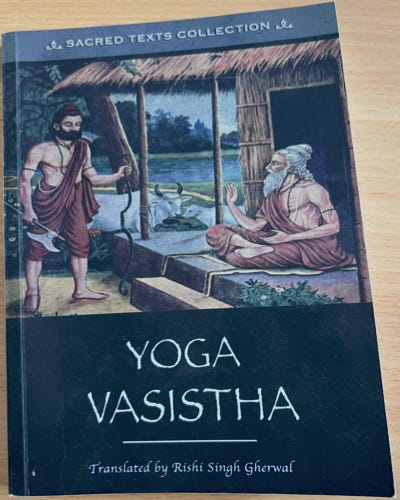
This one is a distilled version of the massive Yoga Vasistha by Valmiki, translated by Rishi Singh Gherwal. It’s also a Q&A style text between the sage Vasistha and a young Prince Rama (again master and disciple style like the previous book).
Rama, if you did not know, was a “human” incarnation of Lord Vishnu, which makes this a perfect book for Advaita Vedanta seekers like us who are stuck in human conditions and want to practice non-duality. The concepts here are grounded in short stories rather than plain doctrine, which helps, if you feel overwhelmed by reading Vedanta straight, undiluted (which I may have done to myself 😃, no regrets)
6. Who Am I?
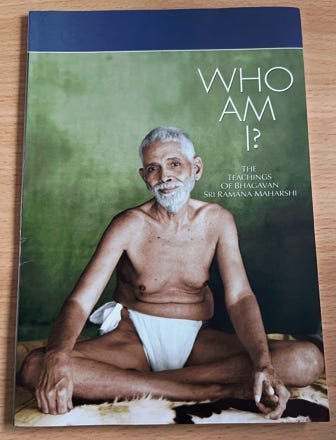
Another Q&A style text, 16 pages, the lightest book on this list but certainly heavier on impact. If you are serious about quietening your mind with constant self-enquiry, then read this book more than once.
7. Tattvabodha
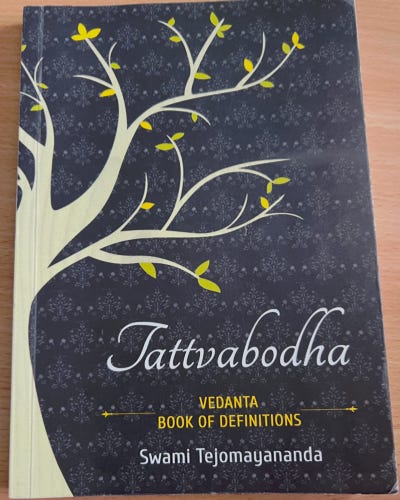
This book is for intellectualising Advaita Vedanta…properly. It’s a dialogue between a master and a disciple on the science of life, written by Adi Shankaracharya, with commentary by Swami Tejomayananda. I studied this book with a group of amazing people under a Guru, and now we’ve moved on to Atmabodha (another book on the nature of Atma). If you’ve got an analytical mind, you will love this book. If you ask me what purpose it serves, I will say, it helps our intellect become clearer on what to discriminate as real and what is ephemeral, and that helps quieten the mind if you practise self-enquiry.
8. Bhaja Govindam
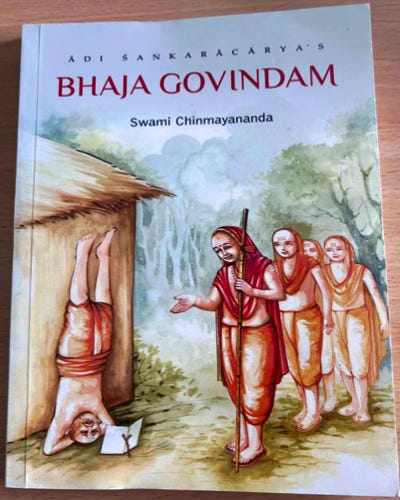
I am genuinely excited to include this book on the list. Oh, what a beauty!
The first thing that pops into my mind when I talk about this book is M. S. Subbulakshmi’s voice singing “Bhaja Govindam”, which my mom sings whenever she wants to talk about her retired-reclusive lifestyle 😃.
Previously I talked about studying Vedanta in an academic way with Tattvabodha/Atmabodha etc, which I accept, I am guilty of. This book destroys whatever ego I had cradled in my mind about those so-called intellectual achievements. Boom! Gone/destroyed!
It is also called Moha Mudgara (Illusion destroyer).
Bhaja Govindam is Adi Shankaracharya, completely done with people wasting their one life, whether it is the old man learning “grammar” from a book instead of thinking about the Lord, or anyone else chasing wealth, youth, or status while death is closer. Underneath the Bhakti advocacy is pure Vedanta. The ephemeral nature of wealth, youth, the body, even academic achievements, all of it is an illusion, and seeing through it is the whole point.
I love the tease, the satire, the roast from Adi Shankaracharya, going after man, whether he’s this old guy hanging upside down on the cover of this book, or this middle-aged woman who tried intellectualising Vedanta.
9. Bhagavata Katha
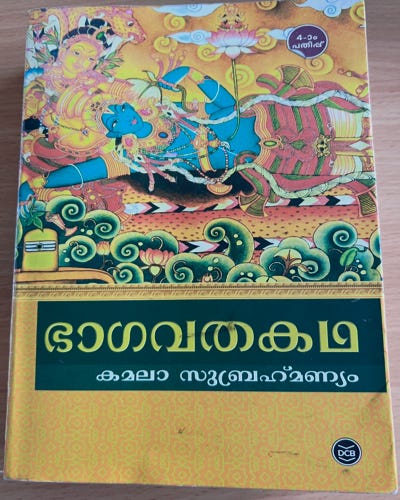
This is one of the two surprises in this list. I picked this up at an airport in India, expecting a casual read, but with Advaita Vedanta already sitting somewhere in the back of my head, I found myself reading this Bhakti focused book through a non-dualistic lens. There is some serious non-dualistic esotericism in these stories!
I’m currently reading the actual Srimad Bhagavatam, the source this storybook draws from. If a simple, story-like retelling brilliantly done by Kamala Subramaniam could give me so much insight, the real scripture must be even heavier, even more thought-provoking. Genuinely excited!
Honourable mention, even though it didn’t make the final cut: Narayaneeyam by Melpathur Narayana Bhattathiri, Bhakti-focused like above, but with strong Vedantic undertones. I just haven’t finished reading it yet.
10. Self Realization in Kashmir Shaivism
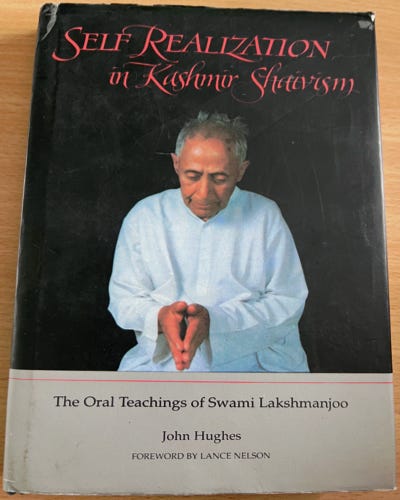
Okay, calm down and just hear me out, Advaitins! This is another shocker, I know. But non-duality landed differently with this book, and now I’m chasing down everything else in this tradition I can find. I was filled with a profound bliss I cannot explain, the whole time I was reading it, and I finished it in one day.
It changed the way I saw the Jiva-Brahman teaching of Advaita itself, and suddenly it wasn’t so abstract anymore. When I compare the two traditions, I cannot help but wonder how similar they are, but they have some core differences. Yet this book really did bring out something in me that explained Brahman more beautifully than ever.
That’s the list! I know it was chaotic. I am no scholar. Mistakes are bound to happen. I am only just a human who loves philosophy. It is not the end of the journey but just where I am right now. Keep smiling ☺️